 HCPSS
Meet Mark Li, HCPSS’ 2026-2027 Student Member of the Board
October 21st, 2026
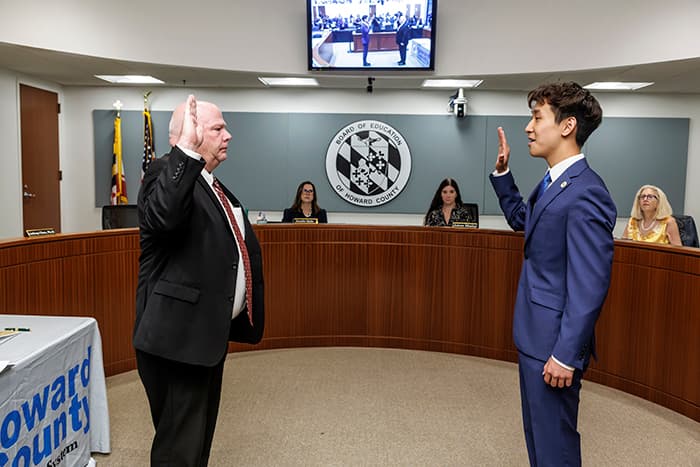
River Hill High School senior Mark Li is the 2026-2027 Student Member of the Board of Education (SMOB). Learn about his inspiration to take on that role, his plans to ensure he represents student voice, the key issues he thinks the Board faces this year, and more.
What inspired you to get involved in student government, and more specifically, to run for SMOB?
My inspiration to run for SMOB came from my very own identity as a second-generation immigrant here in Howard County. Howard County is known for its vast diversity, and I believe our students deserve to see a representative on their school board that embodies and truly values that aspect of our collective identity. I am particularly passionate about educational equity; the who, when, and where are incredibly intentional when it comes to why government and policymaking are so important to me. In a time when young people can feel very civically disengaged and cynical, I see my responsibility as not only being a voice on the board, but being present around the county, meeting the students where they are, physically, emotionally, mentally, and socially. The impacts of policy decisions are found everywhere in our lives both on the micro and macro levels, and I hope during my term, I can continue to uplift the voices of our students to new levels with the expanded voting rights Maryland lawmakers granted the SMOB this year.
What is something you would like the HCPSS community to know about you, as it relates to your role as SMOB?
I am a proud member of many communities that are crucial to the makeup of the collective Howard County identity! Among others, I am a musician and athlete, so I understand the importance of equitable funding for our student musicians and athletes around the county. It hurts to see certain groups of students’ artistic and athletic passions and talents being sidelined simply because their voices aren’t heard on the school board. As someone who has grown up in these communities, I am a fierce advocate for students who deserve these resources in their education.
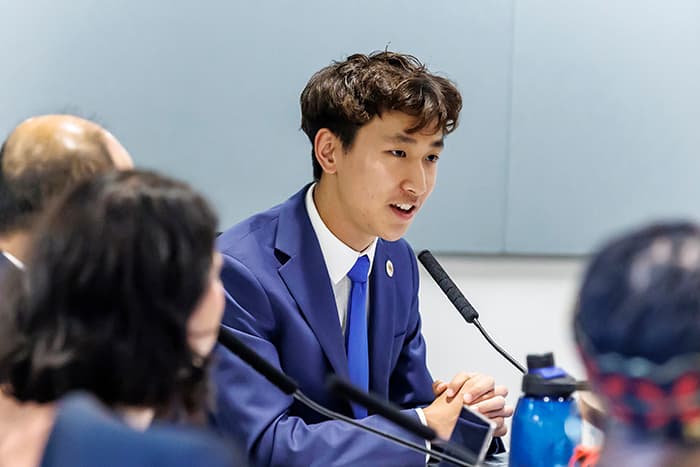
How does it feel to be the sole student member of the Board?
It is one of the largest responsibilities that any policymaker of any age can hold. Particularly here in Howard County, where our education is such a cornerstone of our identity, it is imperative that our students have the utmost access to the spaces where their voices can be heard. As the sole student member of the Board of Education, it is clear to me that over 57,000 students rely on my voice and my acuity to tell their stories and their unique experiences in a compelling way that can translate into tangible sustainable change. This is a responsibility that I do not take lightly; I am extremely grateful to be able to act on the trust that these students have vested in me.
In your role as SMOB, you are charged with representing student voice. What steps do you plan to take to ensure that you are doing that?
I am excited to visit as many middle and high schools as physically allowed, engage with students over social media, as well as attend the everyday casual activities that define the extracurricular scene of our public education (athletic games, arts concerts, academic events, etc.) Through partnership with student leaders within the Howard County Association of Student Councils (HCASC) as well as various committees that serve the County, I look forward to engaging with students through virtual and in-person town halls where their perspectives will be heard and seriously engaged with.
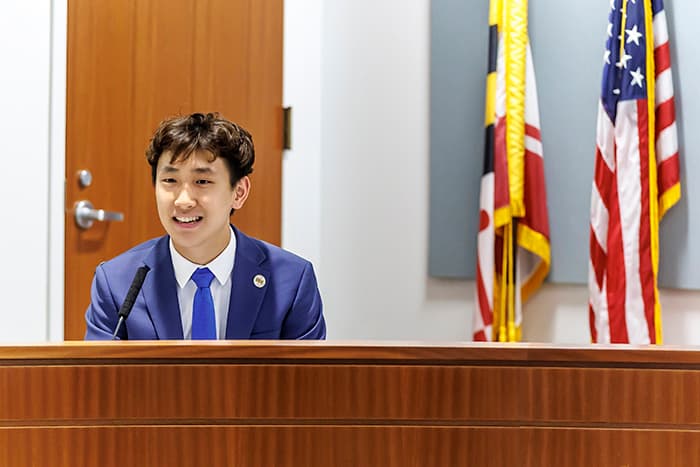
Last year, Maryland lawmakers voted to expand SMOB voting rights in Howard County. Can you explain what has changed?
Now, the Student Member of the Board can vote on some of the most consequential decisions our Board makes, including the operating and capital budgets, school redistricting and attendance boundaries, transportation, school construction and property matters, and student suspension and expulsion. The SMOB still cannot vote on certain personnel and labor matters, including the appointment and salary of the superintendent, employee discipline and promotions, collective bargaining, and a small number of other restricted matters.
The new legislation gives the SMOB substantially more governing power, particularly when it comes to decisions about where HCPSS puts its resources, how our schools are funded, and policies that directly shape students’ day-to-day experiences. By the breadth of our voting authority, Howard County’s SMOB is now the third most empowered local student board member in the country. That also creates a much greater responsibility for the SMOB to engage students across the county, because their input can now directly inform votes on issues that the SMOB could not vote on in previous years.
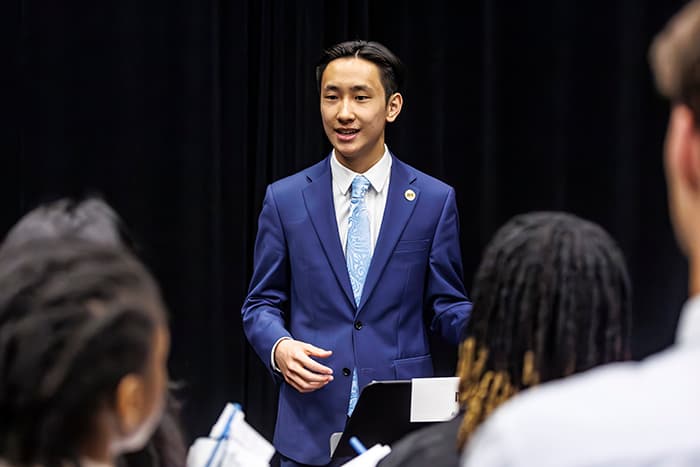
What do you see as the key issues before the Board this school year?
I think one of the biggest issues before the Board this year is making sure our resources are distributed equitably across the school system. That includes protecting funding for the arts and athletics, strengthening mental health supports, and making sure every student has access to the programs and opportunities that make up a complete education, regardless of which school they attend.
Transportation and enrollment are also major issues. As Howard County continues to grow and enrollment patterns shift, we have to make sure overcrowding, school capacity, and transportation challenges do not create unequal experiences for students in different parts of the county as we prepare for several key renovations of certain school buildings and the allocation of resources for the building of a new high school.
I also think there is an important conversation to be had around school climate and belonging. HCPSS serves an incredibly diverse student body, and we need to continue building cultural awareness, making sure students feel represented and respected, and creating school environments where students from every background feel that they belong.
For me, all of those issues come back to the same question of whether we are giving every student, at every school, equitable access to the resources, opportunities, and support they need to succeed.