 HCPSS
HCPSSStrengthening Staff Capacity to Support Every Student
May 21st, 2026
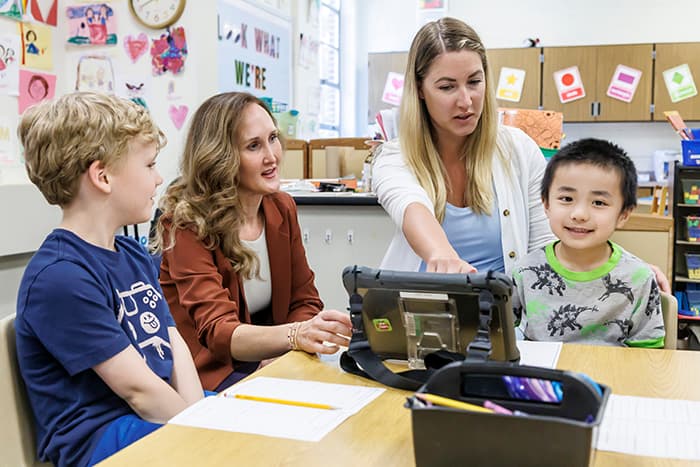
Staff in the Howard County Public School System’s (HCPSS) Division of Academics and Department of Special Education (DSE) are thoughtfully beginning to implement the targets identified in the five-year DSE Strategic Plan as they work to improve outcomes for both students and staff.
Along with building Multi-Tiered Systems of Support (MTSS), teams are redesigning roles and expanding coaching and professional learning opportunities to better support staff and build confidence to effectively serve students receiving special education services.
To support this work, HCPSS reimagined professional learning for all staff this year, with a special focus on improving outcomes for multilingual learners and students receiving special education services and supports. Ongoing learning helps educators create more engaging, supportive, and effective environments where all students can grow and succeed.
“We have heard clearly from our staff that we must improve the timeliness and alignment of our professional learning to better meet the evolving needs of our students,” said Jennifer Webster, Chief Academic Officer. “We are using that feedback to design a more intentional and differentiated professional learning experience that is responsive, relevant, and grounded in what educators need most.”
Here are a few of the initial efforts in place to help support staff:
Reimagining the Role of Paraeducator
HCPSS is reimagining the role of the paraeducator. Beginning with the 2026-2027 school year, paraeducators who were previously serving as multilingual, grade-level, middle school and special education resource paraeducators will transition to an instructional paraeducator role.
The purpose is to move away from assigning paraeducators to specific student groups—like special education or multilingual—and instead create a flexible pool of staff who can support all students based on the unique needs of each school. This shift supports a model where all staff contribute to all learners, rather than having siloed responsibilities.
“The paraeducator shift is going to look very different depending on the school,” said Courtney Skinner, Running Brook Elementary School (RBES) Special Education Instructional Team Leader (ITL). “In my building, we’ve always taken the approach that a child is a child. It doesn’t matter if they have an Individualized Education Program (IEP) or not—if they need support, we provide it. Our general education paraeducators have already been supporting special education students so this shift just affirms that mindset.”
Erin Coleman, St. Johns Lane Elementary School (SJLES) Assistant Principal explained, “This change also creates opportunities to balance workloads. For example, someone supporting students with complex needs part of the day might also support a reading group later. It helps reduce burnout and retain our much-needed paraeducators.”
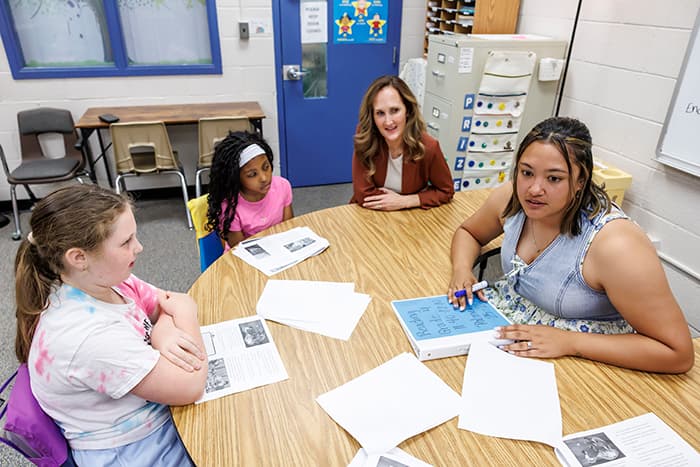
Converting the Instructional Team Leader Role to an 11-Month Position
Another organizational change that will take effect July 1, 2026 includes extending a key leadership role—the Special Education Instructional Team Leader (ITL) position—from a 10- to 11-month position.
A Special Education ITL manages the school’s special education department, ensuring compliance with federal/state regulations, overseeing IEP meetings and providing instructional coaching to staff. Their workload regularly spans the summer.
Skinner has been in this role at RBES since 2017. She spends a lot of time over the summer writing IEPs, holding meetings for students transferring from out of state or county, reviewing records, coordinating with teachers, scheduling meetings and interviewing new team members.
“Moving to an 11-month position acknowledges the reality of the work of those in this position. We are already working through the summer, so it is validating to be recognized and compensated in this way,” said Skinner.
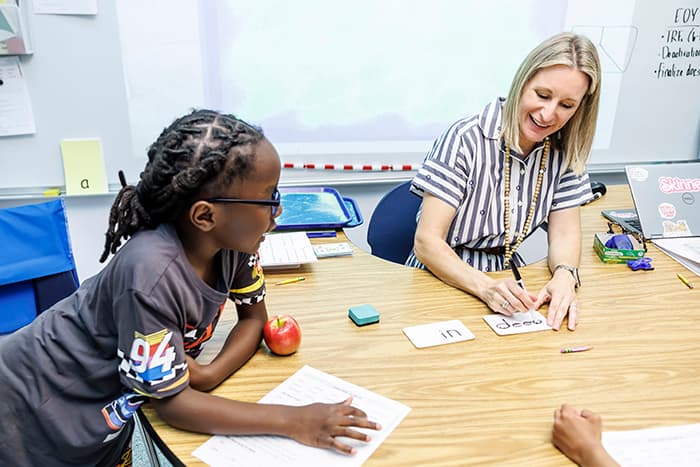
Introducing a New Special Education Coaching Model
A small group of centrally-based staff are being trained in a new coaching model based upon Facilitating Attuned Interactions (FAN)–and are implementing this approach in schools to help build the skills and capacity of school-based special educators.
HCPSS staff have used FAN for many years with Early Intervention Services and Infants and Toddlers Program staff. It’s an evidence-based practice that emphasizes adult attunement—recognizing and responding to the emotions adults bring to their work—while also identifying actionable next steps based on their needs and circumstances.
“Historically, coaching in our system has often been more aligned with a mentoring approach: ‘I’ll tell you what I know and offer advice,’” explained Jen Riccardi, Director of Special Education for Early Childhood and Elementary Schools. “Now, we’re slowing it down to understand what the adult already knows, what they’ve tried, and where they are emotionally—whether that’s worry, uncertainty or feeling stuck”
Riccardi added, “Then we talk through what they’ve tried, how they know what’s working and their data collection that supports that discussion. Because if they can’t figure out how to determine what’s working, then nothing new will stick.”
The goal is that once this pilot group of Central Office staff feel confident in this coaching model, HCPSS will be able to expand the training through future professional learning opportunities for all Central Office special education staff, further strengthening coaching support for school-based special educators.
Providing Job-Embedded Professional Development
Some schools are exploring innovative ways to restructure their schedules to better support the needs of their staff.
“Even as we continue our systemwide work to refine professional learning, we are seeing schools implement effective practices that offer valuable models we can learn from and scale across the district,” said Melissa Brunson, Executive Director of Special Education.
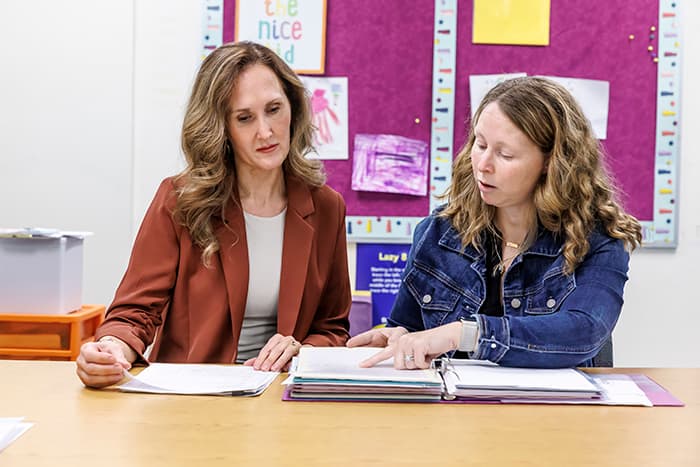
“At SJLES, we have a special education service delivery model that gives our special educators and related service providers a designated IEP day,” said Coleman. “This is a day where staff are not scheduled to directly deliver services. Instead, they use that time for IEP meetings, assessments, collaborating with each other and with general educators, reviewing data and handling case management work.”
While the initial goal was to support and retain special educators, SJLES has also been able to incorporate monthly, job-embedded professional learning for paraeducators and support staff to receive meaningful training at their work site. The topics SJLES plans to address include prompting strategies, deescalation strategies, communication tools, guidance for supporting students with autism, data collection, assistive technology and more.
“We always tell schools: this is a structure, not a magic solution. It doesn’t reduce demands, but it removes barriers—especially around time for collaboration and professional learning,” said Coleman.
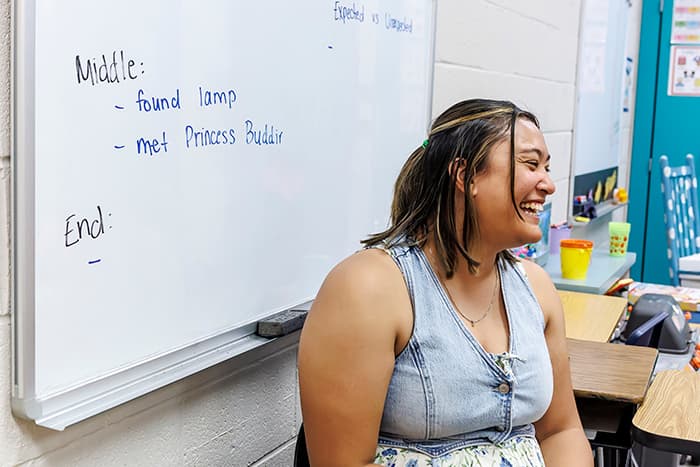
Administrators at Ducketts Lane Elementary School (DLES) are also investing in strengthening the professional learning opportunities provided to paraeducators.
Amy Van Osdel, DLES Assistant Principal explained, “The turning point for us came in February 2026 when the new instructional paraeducator role was introduced. There was a lot of buzz—people were asking, ‘What does this mean?’ So I asked them: ‘What skills do you need to be successful in this role?’ That question changed everything.”
From there, professional learning sessions were developed based on staff input. Topics included Augmentative and Alternative Communication devices and communication systems; IEP basics; behavior and de-escalation strategies; technology skills; small group instruction; and English Language Development supports. The sessions have been offered since March 2026.
“This is all about building paraeducator capacity so they feel confident supporting students in this new role. Attendance is strong, engagement is high and people are all in. When people feel valued and appreciated, they show up—and we’re seeing that,” said Van Osdel.
She continued, “This has also helped shift thinking—we’re all here to support all students, not just within specific roles or silos. I truly believe Education Support Professionals (ESPs) are the backbone of our schools. It’s our responsibility to prepare them for the work we’re asking them to do.”
Enhancing Systemic Professional Learning for Paraeducators
In addition to individual efforts at the school level, professional learning sessions for paraeducators systemwide were enhanced this year and designed in response to feedback indicating a desire for greater choice and relevance to their specific roles.
During a systemwide professional learning day in February, the first half of the day was dedicated to shared learning so paraeducators could receive the same messaging as teachers and other school-based staff, while the second half focused on choice-based sessions.
“We know adult learners benefit from autonomy—being able to identify their own needs and choose learning accordingly, so we offered 17 different sessions,” said Emily Kinsler, Coordinator of Countywide Services.
“The sessions addressed topics like behavior, instructional strategies, how to read an IEP, de-escalation strategies, how to avoid power struggles, assistive technology and tools like Read&Write,” said Kinsler. In addition, they partnered with the Autism Society and invited two young adults on the autism spectrum to share their experiences, which staff found incredibly valuable.
Looking ahead to next school year, staff plan to offer multiple touchpoints throughout the year to provide more support to paraeducators.
Of the systemic professional learning offered to paraeducators, Kinsler elaborated, “First, it helps paraeducators feel valued—that their work is meaningful and impactful. Second, it strengthens collaboration. When paraeducators are more knowledgeable, they can engage more effectively with teachers and support student success more directly. Ultimately, the biggest benefit is for students. The more skilled and informed the adults are, the better outcomes we’ll see.”
Visit the HCPSS website to learn more about the DSE Strategic Plan.